Matsu's Scenic Beauty: Come Capture Stunning Photos at Dongquan Lighthouse!
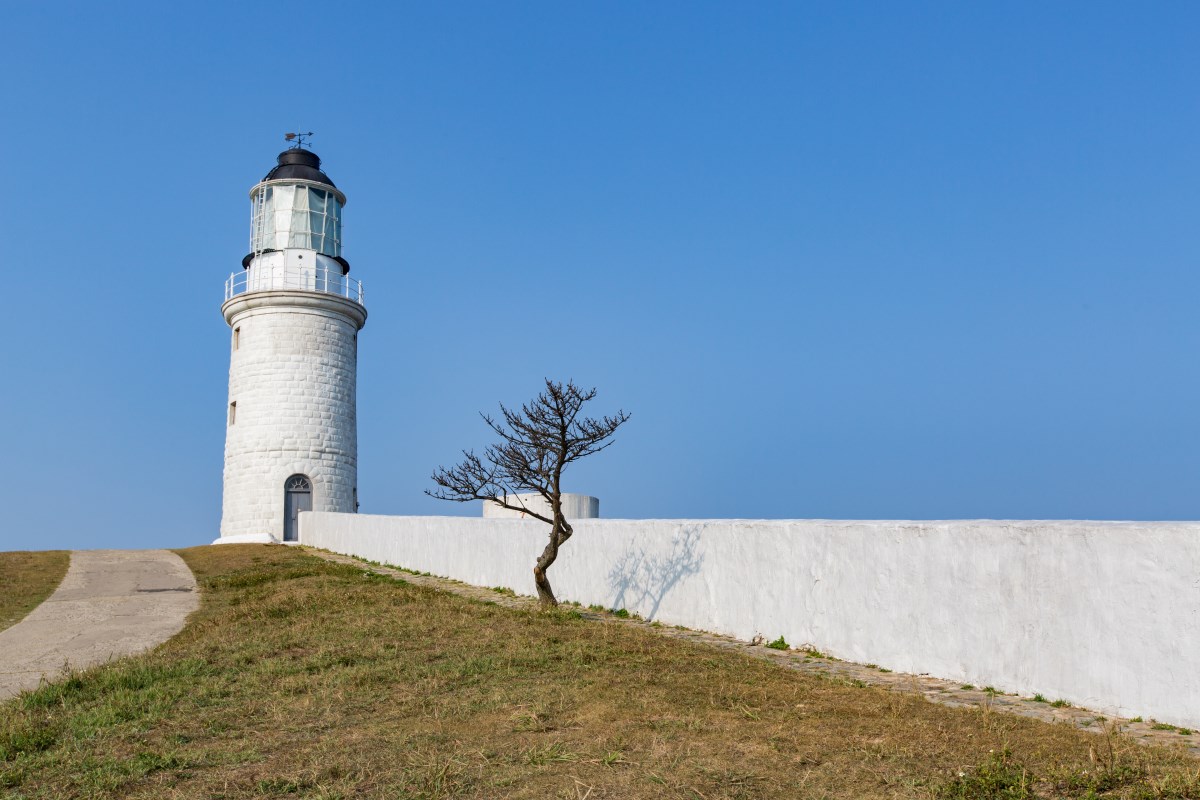
The natural beauty of Matsu is truly breathtaking, and among its treasures, Dongquan Lighthouse shines as a beacon in these waters. For over a century, Dongquan Lighthouse has silently watched over seafarers, emitting a long and two short light signals every night, resembling a guiding light on the sea, providing a bright path home for ships navigating through the turbulent waves. So, let's now follow our footsteps into the history, scenery, and cultural atmosphere of Dongquan Lighthouse!
The historical background and cultural significance of Dongquan Lighthouse.
The Dongquan Lighthouse was built in the 11th year of the Qing Dynasty's Tongzhi era (1872), making it one of the oldest surviving Western-style lighthouses in Taiwan and the Fujian region. It is also the first lighthouse constructed entirely of granite. This historically significant structure serves not only as a crucial navigational beacon at sea but also as an important cultural heritage site in the Matsu region.
The Dongju Island Lighthouse, also known as the "Dongquan Lighthouse," is located in the northeast of Dongju Island and has a close connection to a long history. After the Opium Wars, China signed the Treaty of Nanjing with Britain, opening up coastal trade. To facilitate ships in identifying the direction of Fuzhou, this lighthouse was built during the Tongzhi era (1872) in response to British requests. The Dongju Island Lighthouse not only witnesses the changes in modern Chinese history but also serves as an important navigational landmark in the region.
In 1988, it was designated as a national historic site by the Ministry of the Interior of Taiwan. Constructed using granite, it is one of the oldest surviving Western-style lighthouses in Taiwan and the Fujian region, and the first entirely built with granite. Painted in pristine white, it stands approximately 19.5 meters tall, and its light, refracted through exquisite clamshell-shaped crystal lenses, can be seen from a distance of up to 16.7 nautical miles (approximately 31 kilometers).
Surrounding the lighthouse, there is a grassy area with a white low wall built around it.
This unique wall not only protects the kerosene lamp held by the lighthouse keepers from being extinguished by strong winds but also adds a touch of nostalgia to the entire lighthouse area. Its architectural style resembles that of British coastal towns, hence the affectionate nickname given by local residents, "White Haired Castle" ("白毛城" in Mandarin). This nickname not only reflects the history and architectural characteristics of the lighthouse but also demonstrates the locals' sense of closeness and pride in this landmark.
The Dongquan Lighthouse has become an important tourist attraction in the Matsu Islands.

Visitors coming here can not only enjoy the magnificent sea views and the classical beauty of the lighthouse but also feel the historical sentiment that transcends time and space. Standing at the top of the lighthouse, overlooking the vast ocean, feeling the sea breeze, one can almost hear the stories of the past sailors, and sense the silent guardianship and steadfastness of this lighthouse!
The Dongju Island Lighthouse has stood on the island for over a century.

The Dongju Island Lighthouse has been silently carrying out its mission of safeguarding maritime routes for over a century. Every night, it emits a long and two short flashes of light, guiding ships on their voyages.
One notable feature of the lighthouse is the 30-meter-long white windproof low wall connected to the grassland adjacent to the local office. It not only serves a practical purpose by protecting the staff and kerosene lamps from strong winds but also adds a touch of uniqueness to the lighthouse area. Due to the higher elevation and strong winds on Dongju Island, the presence of this wall is particularly important.
The Fish Road Ancient Trail: More than just a pathway, it is also a mark of history.

The Fish Road Ancient Trail was once an integral part of the daily life of fishermen, who would transport fresh fish from the fishing port to the village along this mountainous path. It served not only as a passageway but also as a living history of the local fishing culture.
Although this ancient trail may not be the most prominent tourist attraction in Dongju Island, it offers a unique perspective, allowing visitors to experience the lifestyle and traditions of the locals. Walking along the Fish Road Ancient Trail, one can admire the natural beauty and immerse themselves in the enduring cultural atmosphere.
Dapu Village: From fishing village to the rebirth of art.

Dapu was once a bustling fishing village, but with the outflow of population, it once became an uninhabited village. However, in recent years, with the influx of artists, the old houses have not only preserved their traditional appearance but also radiated new artistic vitality.
Dapu Village, especially the Fukuzheng settlement located below the lighthouse and the area adjacent to the Grade III Historic Site "Dapu Stone Carving," has become a revitalized area of art and culture. Artists have redefined the charm of the old village in innovative ways.
Matsu has four conservation areas, two of which are located in Dongju, and Dapu Village is one of them. Today, it is not only the location of historic sites but also a destination full of creativity and vitality, worthy of careful exploration by visitors.
Today, the Dongju Island Lighthouse stands as the guardian of maritime safety and has become a popular destination for history enthusiasts and photographers, offering magnificent sea views and unique architectural beauty, while also carrying rich history and stories!