Matsu's Instagrammable Tour: Qinbi Village is Super Photogenic!
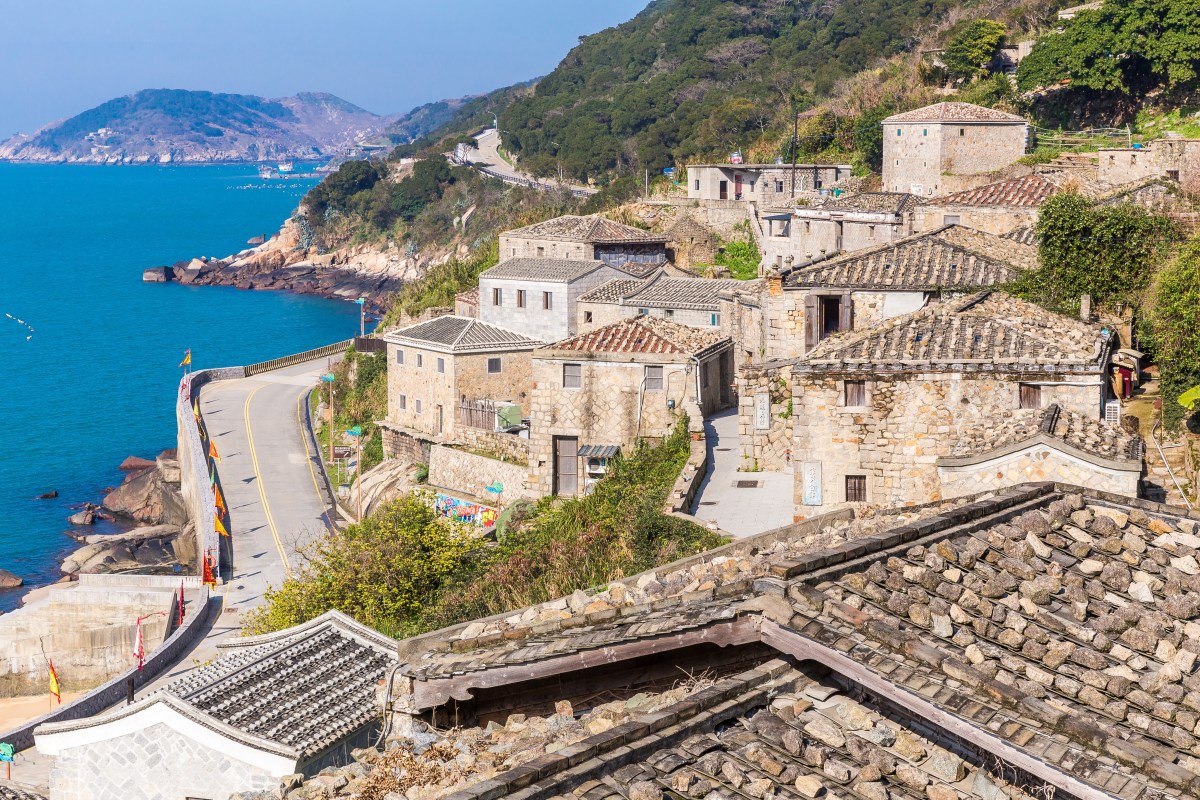
To find the charm of the Mediterranean, there's no need to travel far abroad. Matsu's Beigan Qinbi Village offers a mesmerizing romantic experience! A treasure of Mediterranean ambiance, immerse yourself in the beautiful natural landscapes, unique culture, and culinary delights. Whether admiring architectural beauty, participating in local religious ceremonies, or savoring delicious food, Qinbi Village is an unforgettable destination!
The Qinbi area is uniquely representative among the Matsu archipelago.
It has completely preserved the traditional Min Dong architecture of Matsu, winning the affection of the domestic and international architecture, culture, and art communities. In the early years, residents lived off shrimp fishing, but in the 1970s, the fishing industry declined, and most residents were forced to relocate for work.
However, under the government's planned renovations, the stone houses that had been abandoned due to depopulation were transformed into bed and breakfasts and art and cultural spaces, enabling this stone house village to once again display its diverse charm of yesteryears. Wandering through these winding mountain streets, one can find houses adorned with weathered and faded unique slogans, as if traveling through a time tunnel, invariably bringing a smile to the faces of visitors!
The Qinbi Village is built along the mountain terrain, with its back to the mountains and facing the sea, layered and staggered in an orderly manner.
The main areas include Beimian Mountain, Nanmian Mountain, and Zhonglu among others. In the late Qing Dynasty, the Chen family from He Shang in Changle, Fujian, developed this area, with many houses made from local granite.
Among them, the most exquisite residence is known as the "Pirate House," built by Chen Zhongping, the head of the Beigan unit of the "Peace and National Salvation Army" during the war period. Not only were high-grade Qingbai stones used for the facade's walls, but it is also the only building in Qinbi Village with a rooftop adorned with stone lions, standing tall and magnificent.
Religious Belief - The faith in the Ironclad Marshal (Frog God)

In addition to appreciating the beautiful scenery, one can also experience the unique local religious belief - the faith in the Ironclad Marshal. The Frog God is revered by local residents as the Ironclad Marshal. This animal worship was brought to Matsu by early settlers from Eastern Fujian.
To this day, residents still frequently visit the Tianhou Palace, seeking guidance and blessings from Mazu and the Ironclad Marshal.
Lastly, one must not miss the delicacy to savor in the autumn and winter seasons - aged wine thin noodles! This delicious noodle dish is renowned for its soup made with aged wine, paired with red yeast rice pork, fried eggs, and ingredients stir-fried with sesame oil. Its simple ingredients bring out a delicate soup base, offering an intoxicatingly delicious taste of wine-flavored noodles. A visit to Qinbi would not be complete without trying it!
As you stroll through the alleys between the stone houses, the deep blue of the sea is visible everywhere. Each turn reveals a different scene, each with its own unique features. Consider finding a cafe where you can look out at the sea and the islands, accompanied by the sound of the waves, and enjoy the peaceful beauty before you.
Visiting Banli Beach
When the rays of the sun gently caress the sands of Banli Beach, this vast expanse of white shoreline acts like a pearl set in the azure sea, shimmering with dazzling light. The sand is not only fine and soft but also appears particularly sparkling under the sun due to its quartz content.
Banli Beach, embraced by the three mountains of Qinyan, Banyan, and Liyan, is not only the most level and expansive high-quality sandy beach in the Matsu area but also an excellent spot for people to admire the beauty of the sunrise and sunset.
Come to visit the Banli Tianhou Temple
The temple might be the smallest, most miniature Mazu Tianhou Temple in the world, its rich and vivid colors creating a sharp contrast with the simple residential houses surrounding it, often attracting the attention of passersby. The two adorable stone lions in front of the temple, as well as the sculptures of Thousand-mile Eye and Favorable Wind Ear on the temple eaves, make this small temple a unique sight by the sea.
