Meizhi Performing Arts Center
Introduction
The Matsu Archipelago, located off the coast of the Fujian Province at the mouth of the Min River in Mainland China, has served as the maritime frontier for thousands of years. Ancestors from coastal areas migrated to the islands for survival or to escape calamities, settling down and making a living by fishing in the sea. However, this way of life underwent significant changes in the mid-20th century. In 1949, following the defeat in the civil war, the Nationalist Government retreated to Taiwan, leading to the gradual loss of control over the coastal islands. The Matsu Archipelago became the last frontier and battleground of the confrontation between the Nationalist and Communist forces, ushering in nearly half a century of military control and wartime administration.
This abrupt historical shift changed Matsu's role and molded the lives of its residents. With the threat from the sea and various military restrictions, the relationship between the residents and the ocean, once facing the sea, often required concealment and hiding under the looming shadow of military control. During the decades of blackout regulations, the nights shrouded in prolonged darkness were devoid of light. By the end of the 20th century, as the wartime status of Matsu was lifted, the islands were released from confinement, transitioning from the darkness of war to embracing the legacy of wartime, anticipating a new chapter in history with an inclusive stance.
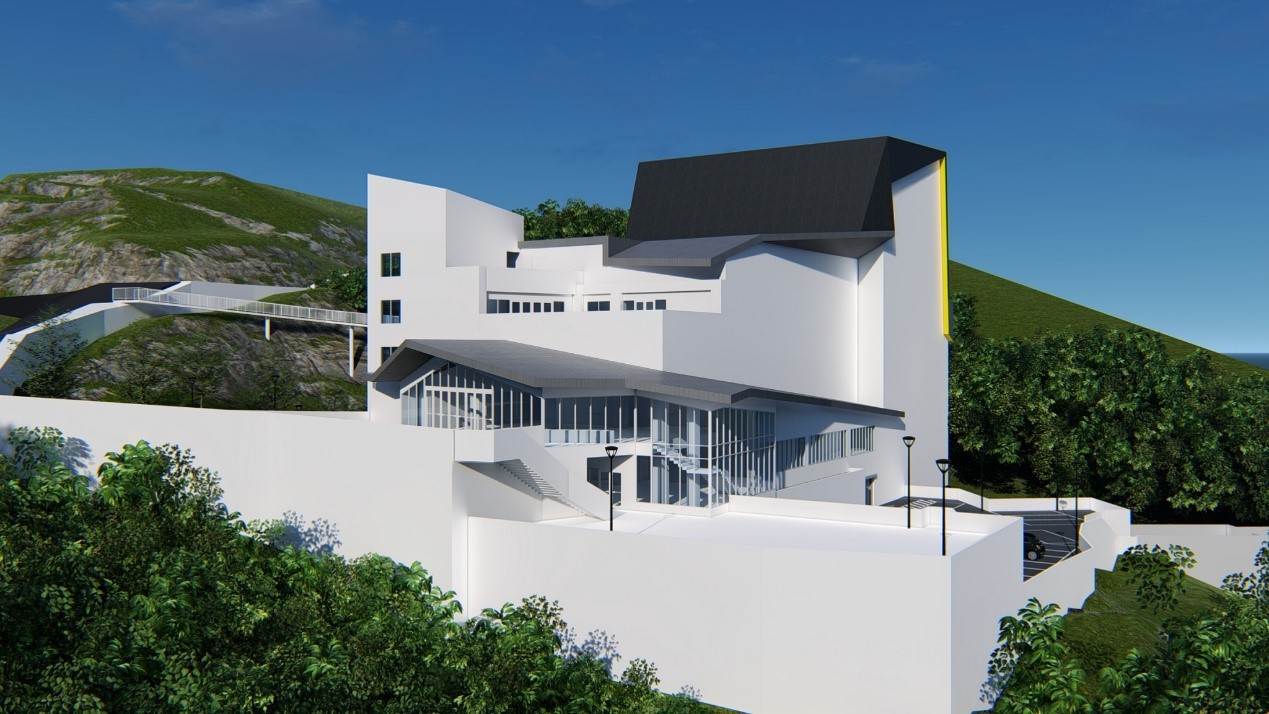
Future Performing Arts Center is planned to emerge as a multifunctional performing arts center, integrating architectural design with the natural environment and employing translucent materials to create a facility that appears as a luminous body embedded in the terraced landscape of the sea. It will also incorporate historical memories while transitioning between old and new structures, embracing the vastness of the world and radiating the brightness of art.
Facility Positioning
The positioning of the Matsu Meishi Performing Arts Center is aimed primarily at the residents of Matsu and tourists, serving as a professional-grade performing arts facility. By offering high-quality performance art programs, diverse cultural and educational activities, and creating a forward-looking and innovative environment that resonates with local customs and traditions, the center aims to engage the public in performing arts and elevate the cultural life of the region.
Scale and Grade
To ensure the quality of performance viewing and operational costs, the audience seating capacity is designed for 600 seats. The stage performance space and professional equipment must meet the demands of classical and contemporary music, traditional and modern drama, and cultural tourism theaters.
Architectural Planning
- Preserving the historical and collective memories of wartime landscapes The past glory of Zhongzheng Hall has faded with the passage of time but holds significant emotional memories for the local community. Therefore, in overall planning, efforts should be made to echo historical spaces, coastal landscapes, and military cultural landscapes, preserving venues with collective memories while integrating modern elements of exhibition spaces to revive the former glory.
- Utilizing historical buildings for reuse, giving new life to Zhongzheng Hall In architectural design, responses to the architectural texture of Zhongzheng Hall and the preservation of historical site cultural values are necessary. Recognizable designs that maintain the relationship between old and new structures should be considered, and multi-level activities should be employed to properly reuse the space, breathing new life into the old buildings.
- Incorporating the environmental characteristics of Meishi Bay, linking Meishi's regional tourism development Facing the surrounding mountains and sea, the architectural body should leverage the unique seasonal luminous algae "blue tears" and maintain visual transparency to provide visitors with a distinctive spatial experience. To meet the diverse needs of arts and culture, island culture-themed performances should be complemented by regional tourism activities, connecting Meishi Tea House, Meishi Village, and Meishi Bay to stimulate commercial activities and drive island tourism development.
- Assessing environmental noise and ensuring acoustic insulation configuration With the site backing onto mountains and facing the sea, the sound of waves and fishing boats may have some impact on the performing arts space. Therefore, arrangements for public areas, corridors, and service spaces should consider acoustic design to isolate external environmental noise.
- Future Conceptual Illustration


