Pagoda-burning in Tieban
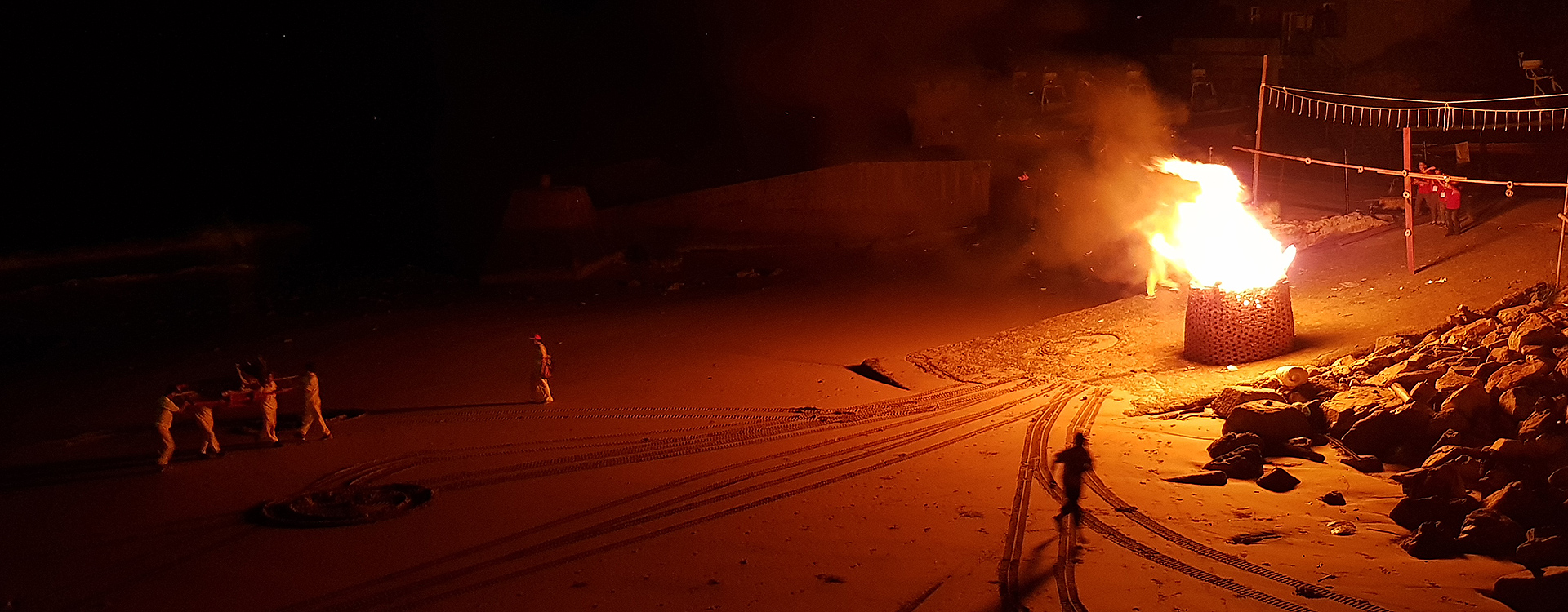
Pagoda burning is a Mid-Autumn Festival tradition commonly seen in the eastern part of Fujian, originating in Fuzhou hundreds of years ago. Today, the Tieban village in Matsu is the only place in Taiwan where the ancient practice remains, making the pagoda burning event here the most iconic every year during Mid-Autumn Festival.
In fact, pagoda burning was popular all over Matsu and not just in Tieban in the early days. The pagodas are usually one to three meters in height and are made with broken tiles. The taller versions contain a brick base, taking up about one quarter of the height. A hole is kept open at the upper end of the pagodas for fuel dropping. Burning the pagoda, and along with it some unwanted materials, during Mid-Autumn Festival signifies sending away the old while ringing in the new and good. Fueling materials may include wood, bamboo and grain husks, and sometimes even rosin powder and salt, for added dramatic fire effect, creating a further spectacle.