The Origin of Matsu
Matsu, an archipelago rich in history and culture, has its origin in a story from the Song dynasty of China. It is said that in the Dongluo village on Putian County’s Meizhou Island, Fujian Province, there was once a fisherman named Lin Yuan Chih. He had six daughters and one of them was called Moniang. She was known to be virtuous and caring, especially towards her parents. One day, Moniang's father suffered an unfortunate death while on the sea fishing. Deeply pained, she dived into the waters in search of him. Unfortunately, her own body was later found on Nangan Island, along with her father’s, which she clutched to her back tightly even until the very end. Moved by her bravery and love, people gave her a solemn burial and built a temple in her honor. From then on, she has been respectfully referred to as Matsu, the sea goddess much loved by all.
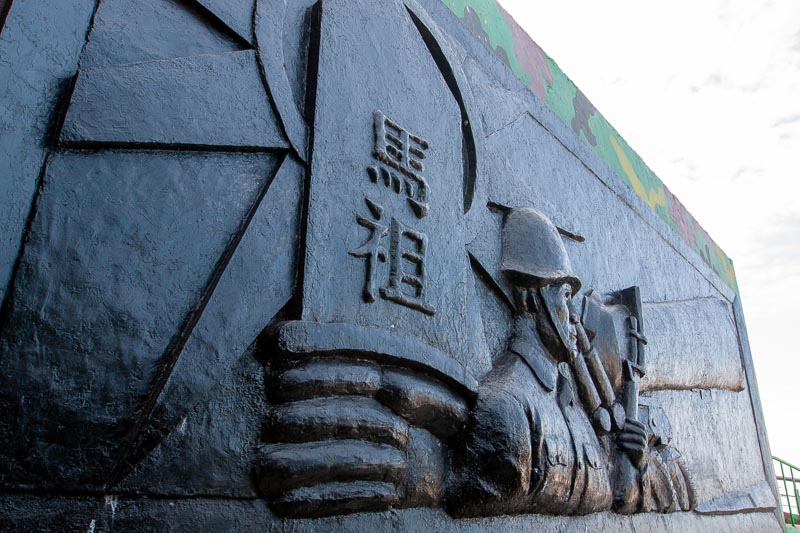
This ocean deity’s name, Matsu, is said to be the origin of the islands. Her name, despite sounding the same as the archipelago, is written with a feminine radical (meaning mother) in the Chinese language, while the name of the islands is written without the feminine radical (meaning horse). There are two dominant explanations for this. One is to avoid using the same character out of respect for the sea goddess. The other is to make the place sound more masculine and tough as a battlefront against the enemies during the military control period.
The earliest historical relics of Matsu were unearthed on Dongju Island, where archaeological efforts found evidence linked to the Neolithic Age (10,000-2200 BC). On other islands such as Nangan and Dongyin, everyday items, such as pottery and objects made out of shells dating back to the Song and Yuan dynasties (960-1368), were subsequently discovered. A historical event from the Yuan dynasty was even recorded on a stone slab at Renai Village’s Dawang Temple on Nangan Island. The text on the slab reads, “Gracious donation of 20 strings of coins in the Centrally Unified Currency from Lin Youtsai.” As time went on to the year of 1911, a group of people from Fujian Province’s Changle County sailed across the sea and settled on Matsu. Their bay-based villages dotted the islands' coastlines, which to this day, have become a cultural heritage unique to the islands.
Matsu is a place full of cultural wonders and rich in history. Whether you are looking for island getaways, warfare relics, history and culture, or simply exotic local experiences, Matsu is sure to offer you an unforgettable trip.